
History
The hotel that Hollywood chose to film in Segovia.
Advantages of booking on our website
Without intermediaries, without surprises
Arrive and enjoy, that simple.
Direct contact and immediate response
Home » Hotel Real Segovia » History
The hotel of the stars
Since 1952, witness to the history of a city and an era.
A legacy that continues to live on
From the Gran Hotel Las Sirenas to the Hotel Real Segovia
Many are the anecdotes and cherished memories that the walls of the current Hotel Real Segovia guard. Originally opened in June 1952 under the name “Gran Hotel Las Sirenas”, it was born as the first luxury establishment in the city.
Its opening was strongly driven by the boom of cinematographic productions of the time, immediately becoming the exclusive refuge of the most sought-after celebrities from Hollywood and Spanish cinema.
Seven decades later, its walls continue to keep the stories and memories of those golden years.
Sofia Loren
The great diva of Italian cinema
Sofía Loren turned the hotel into her residence during the filming of Pride and Passion (1957) and The Fall of the Roman Empire (1964). To adapt the space to her needs, she requested the joining of two rooms that she used as accommodation, dressing room, and office.
It was also during those stays that the close friendship with Gary Grant was born, a relationship that the press of the time described as one of the most talked-about romances in Hollywood.
No translation needed as "Joan Fontaine" is a proper name and does not have a direct translation.
The first big international star
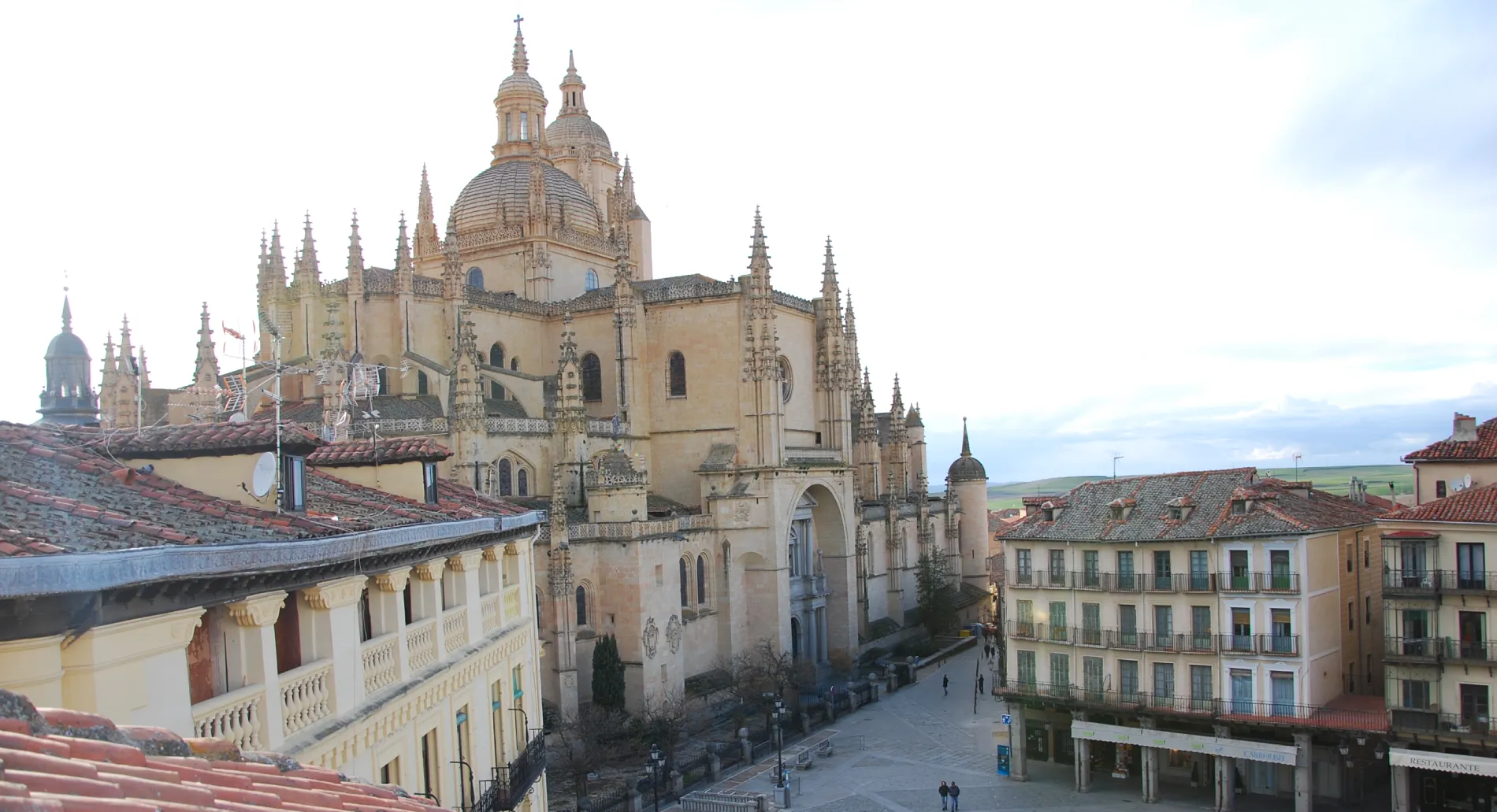
Just a few months after the opening of the hotel, Joan Fontaine stayed here during the filming of “Tres historias de amor,” considered the first foreign fiction production filmed in Segovia. Many of its scenes were set in Plaza de San Martín, located in front of the building.
Her presence marked the beginning of a close relationship between the hotel and the international film industry.
Carmen Sevilla
The face of Spanish cinema
In 1957, Carmen Sevilla chose the then Grand Hotel Las Sirenas during the filming of “Aventura para dos” (Adventure for Two). The actress was part of a generation that helped consolidate Segovia as one of the great stages of Spanish cinema in the mid-20th century.
Beyond cinema
Music, culture, and great personalities
In 1956, Leopold Stokowski, considered one of the most brilliant orchestra conductors of the 20th century, chose these rooms as his residence during his stay in Segovia. That same year, the pianist Antonio Iglesias shared hallways with another unavoidable name in Spanish classical music: María Robles, a great harp concertist, who stayed here in 1957.